


Frenquency Converters

Get inspired with expondo blog



Frenquency converters for precise motor speed control
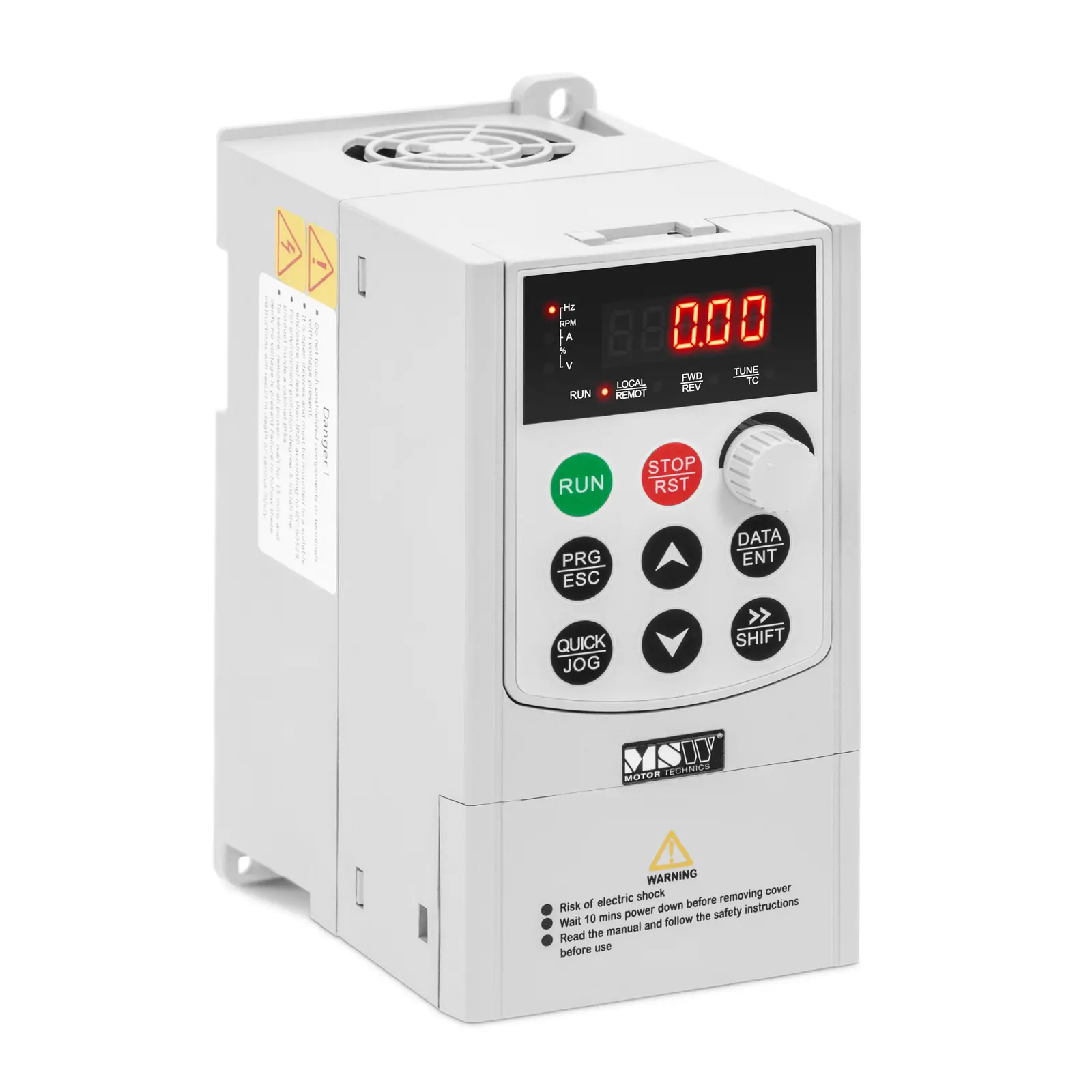
Frenquency converters are the go-to solution when you want smooth, dependable control of AC motor speed and torque without sacrificing reliability. By adjusting the output frequency and voltage supplied to the motor, they let you fine-tune performance to match the task—whether you need a gentle start for delicate processes, stable running speed under changing loads, or controlled stopping to protect equipment and improve safety.
Within this category you will find modern VFD frequency inverter solutions designed for practical day-to-day use across workshops, light industry and building services. They are ideal for applications such as pumps, fans, conveyors, mixers, compressors and a wide range of motor-driven machines where speed variation helps reduce energy consumption, limit mechanical stress and increase overall process control. Instead of running a motor at full speed and throttling flow or output mechanically, a converter allows the motor to work only as hard as necessary—often translating into quieter operation, less heat and longer service life for bearings, couplings and belts.
Many users choose frenquency converters not only for energy savings but also for consistency. Controlled acceleration and deceleration ramps help prevent water hammer in pumping systems, reduce product spillage on conveyors, and minimise shock loads on gearboxes. For installations where a more basic starting method is preferred, you may also wish to explore softstarters as a complementary approach; however, converters remain the most versatile choice when variable speed is the priority.
VFD frequency inverter features: efficiency, protection and usability
A well-specified VFD frequency inverter should feel like an upgrade to the whole drive system, not just an add-on. That is why our frenquency converters focus on the features that matter in real installations: stable speed control, straightforward set-up, and built-in protections that help keep both the motor and the drive safe under demanding conditions.
Look forward to practical control options such as clear parameter menus, local keypads and simple start/stop operation, as well as terminals for remote commands. Many units support flexible signal inputs—such as analogue references (e.g. 0–10 V or 4–20 mA) for speed setpoints and digital inputs for direction, preset speeds and interlocks—making it easier to integrate the converter into existing machinery. In systems that benefit from automatic regulation, features like PID control can help stabilise pressure, flow or tension without constant manual adjustments.
Protection functions are equally important. Overload and overcurrent protection, overvoltage safeguards, undervoltage monitoring and thermal management help your drive cope with everyday challenges such as heavy starts, fluctuating mains supply, blocked fans, or rapidly changing loads. Adjustable acceleration and braking ramps help you avoid nuisance trips while keeping mechanical stress under control. Depending on the model and installation requirements, you may also value features such as configurable carrier frequency for quieter motor operation, braking capability for faster controlled stopping, and fault history logs that simplify troubleshooting and reduce downtime.
In terms of installation style, frenquency converters are commonly selected as compact panel-friendly units for control cabinets, as well as more robust variants intended for tougher environments. Consider factors such as cooling and airflow, enclosure and ingress protection, and accessible wiring terminals, especially if the drive will be installed near dust, moisture or vibration. For a tidy, professional build, converters also sit naturally alongside other essentials from our wider range of electrical equipment, helping you create a complete control solution with consistent quality and specification.
Choosing frenquency converters for your application
Selecting the right frenquency converters is mainly about matching the drive to the motor and the job it must do. Start with the motor’s rated voltage, current and power, then decide whether your supply is single-phase or three-phase and choose a converter that fits both the input and the required motor output. If you are controlling equipment with variable load characteristics—such as pumps and fans—you can often prioritise efficiency and smooth regulation. For constant-torque loads—such as conveyors, mixers or certain machine tools—ensure the converter is sized with appropriate torque capability and overload capacity.
Next, think about control needs. If you want simple operation, a converter with intuitive local control and a straightforward parameter set may be ideal for quick commissioning. If your machine requires external signals, multiple preset speeds, or automatic regulation, choose a VFD frequency inverter that offers the right combination of analogue inputs, digital I/O and communication options. For maintenance teams, clear diagnostics and accessible settings can make a real difference, enabling faster fault-finding and more confident adjustments during production changes.
Environmental considerations are just as important. In enclosed panels, plan for heat dissipation and adequate ventilation, and allow space around the drive for airflow. In harsher areas, consider models suited to higher protection levels and stable performance, particularly where dust or humidity can shorten the lifespan of sensitive electronics. If cable runs are long or the installation is particularly noise-sensitive, selecting the correct set-up and ensuring good wiring practices will help keep operation stable and reliable.
Ultimately, frenquency converters bring flexibility to motor-driven systems: smoother starts, better control, more efficient running and a more refined operating feel. Whether you are upgrading a single piece of machinery or standardising a workshop’s drive technology, the right converter helps you tune performance with confidence—giving you responsive speed control today and an easy pathway for future expansion or process improvement.