


Softstarters
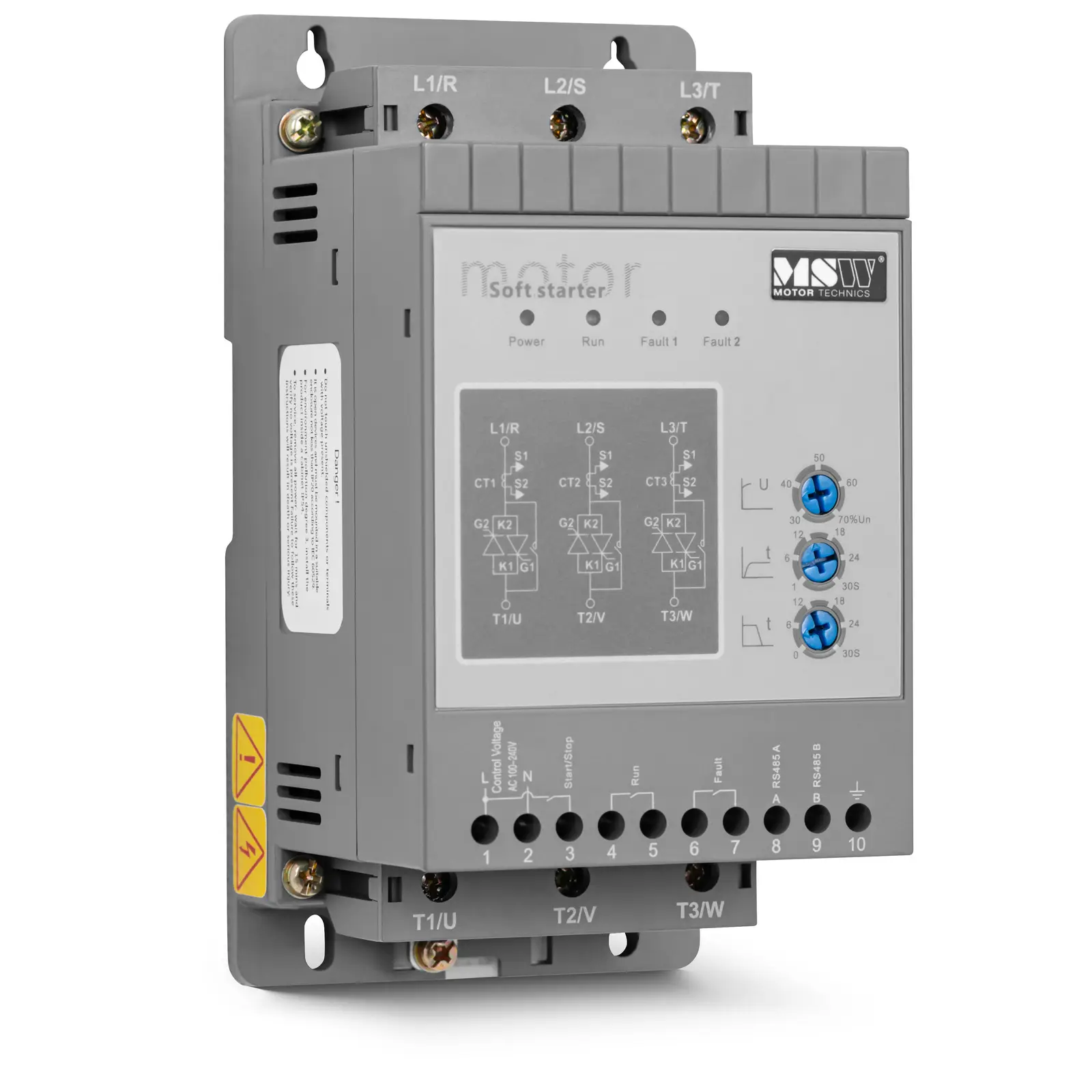

Softstarters for smoother motor starts and longer equipment life
Softstarters are designed to take the stress out of starting electric motors by controlling the voltage (and therefore current) during run-up. Instead of the sudden inrush that can jolt machinery, a soft starter brings the motor up to speed gradually, helping to protect mechanical components, reduce wear and tear, and improve day-to-day reliability. For many workshops and industrial environments, that translates into fewer unexpected stoppages, calmer operation, and a more professional working experience.
Whether you are running pumps, compressors, fans, conveyors, or other motor-driven systems, a soft starter helps minimise torque shocks that can otherwise damage couplings, belts, gears, bearings, and mountings. That smoother start also reduces nuisance tripping and light flicker caused by high starting currents, which is particularly helpful in facilities where multiple machines share the same electrical supply. If you are outfitting a broader workspace and want your power and workshop setup to feel cohesive, it can be useful to explore related automotive equipment as part of your planning, while keeping softstarters at the heart of dependable motor control.
Beyond gentle starting, many softstarters also support controlled stopping (soft stop), which is valuable when you need to avoid water hammer in pumping systems or prevent sudden load shifts in moving equipment. By allowing adjustable ramp-up and ramp-down times, these units help you tune performance to the demands of your application rather than forcing your motor to operate in an all-or-nothing way.
Choosing the right soft starter: power, control and protection
Selecting the right soft starter begins with your motor and load. Key considerations include motor voltage, rated current, and the type of duty cycle expected. A correctly sized unit should comfortably handle the motor’s rated current and the start conditions of your application, including heavier loads that require longer acceleration times. If your system starts under load, or you have frequent start/stop cycles, choosing a model with appropriate current capacity and thermal performance helps ensure stable operation.
Control features matter just as much as raw power. Many softstarters provide adjustable starting voltage, current limit, and ramp time settings, letting you fine-tune acceleration for different machines. More advanced options may include multiple start profiles, programmable inputs/outputs, and clear status indication for quick checks at the panel. For users who value straightforward commissioning, look for intuitive controls that make it easy to set parameters accurately and repeatably.
Protection functions are a major reason customers choose a soft starter instead of a basic starter circuit. Depending on the model, you can benefit from motor overload protection, phase loss detection, overtemperature safeguards, and fault indication that supports faster troubleshooting. Built-in bypass (where available) can improve efficiency by reducing heat once the motor reaches full speed, while still retaining controlled starting when you need it. In environments where precision maintenance is part of everyday work, it’s common to pair a clean motor-start strategy with accurate servicing procedures; for example, when carrying out engine or drive-related tasks, timing locks can be part of a careful toolkit, complementing the same “do it right first time” approach that softstarters bring to motor operation.
Softstarters in real workshops: installation tips and applications
Softstarters fit neatly into a wide range of practical setups, from compact control panels to larger installations where several motors need predictable, repeatable start behaviour. Typical applications include ventilation systems that benefit from gentle ramping, compressors that need reduced mechanical shock, and pumps where controlled start and stop can protect pipework and valves. In each case, the core advantage remains the same: smoother transitions that help equipment last longer and run more consistently.
For installation, it’s important to match wiring and protection devices to the requirements of your chosen unit and motor. Adequate ventilation within the enclosure, correct cable sizing, and sensible placement for service access all contribute to dependable performance. Once installed, take the time to adjust ramp settings and current limits so the motor accelerates confidently without unnecessary strain. A well-tuned soft starter should deliver starts that feel controlled and stable, with fewer vibrations and less mechanical noise compared with direct-on-line starting.
Softstarters are also a strong choice when you want to improve comfort and usability in working areas that must cope with temperature swings. While softstarters focus on motor control rather than heating, many workshops combine reliable electrical systems with practical climate solutions, and you may find diesel auxiliary heaters helpful for maintaining a workable environment so equipment and operators can perform at their best. By investing in a soft starter, you are choosing a smarter way to start motors: one that supports efficiency, protects valuable machinery, and helps your operation feel calmer, cleaner, and more professional every time you power up.