


Manual Handling Equipment

Manual handling equipment roller tables for fast, controlled movement
When you need to move cartons, totes, trays, parts or packed goods from one station to the next with minimal effort, roller tables are a practical cornerstone of manual handling equipment. Designed to support and guide loads across a stable run of rollers, they help teams keep work moving smoothly through packing benches, goods-in areas, dispatch lanes and light production lines.
Rather than lifting and carrying repeatedly, operators can slide or push items along the rollers with controlled, predictable movement. This supports tidy workstations, consistent throughput and less wasted time repositioning loads. Roller tables are especially useful wherever items are handled frequently: order fulfilment, kitting, sorting, labelling, weighing and quality checks can all be made quicker when products flow to the operator instead of the operator walking back and forth.
Built for everyday use, roller tables provide a robust working surface that keeps goods aligned, reduces snagging and helps prevent products being dragged across fixed surfaces. They also make it easier to create a clear route for items through your workspace, supporting a more organised layout and helping staff maintain a steady rhythm during busy periods.
Manual handling equipment options: gravity, extendable and ball-transfer roller tables
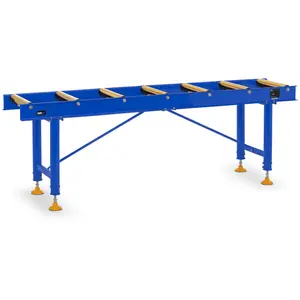
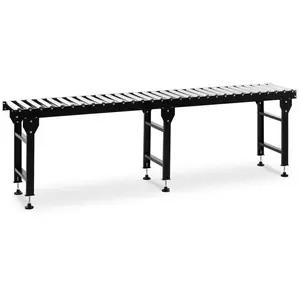
Different tasks call for different roller table designs, and choosing the right type can make a noticeable difference to speed and control. Gravity roller tables are a popular choice for general movement: they rely on a gentle push (or a slight incline, where appropriate) to keep items travelling. They suit a wide range of boxes and containers and are ideal for linking benches, packing areas and short transfer routes.
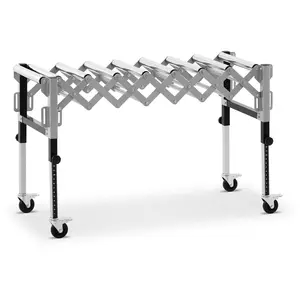
For spaces that change throughout the day, extendable roller tables offer flexibility. Their length can be adjusted to suit the job, which is handy for loading and unloading, temporary staging, or creating a short-term transfer line during peak demand. When not required, they can be collapsed to free up valuable floor space and keep aisles clear.
Where direction changes are needed, ball-transfer roller tables (or ball transfer sections) provide agile movement in multiple directions. They are well suited to turning, aligning, and positioning items precisely before packing or palletising. This is particularly useful when goods must be oriented accurately for scanning, labelling or placing into shipping cartons.
Across these types, the details matter. Consider the dimensions of the working surface, the spacing and material of the rollers, and the frame construction for stability under load. If you handle smaller items, closer roller spacing can provide better support; for larger cartons, a wider roller path can improve guidance. In environments where wipe-down and cleanliness are important, smooth surfaces and hard-wearing finishes can help keep maintenance simple and downtime low.
Manual handling equipment that fits your workflow: set-up, safety and system building
A roller table works best when it matches the way your team actually handles goods. Think about where items arrive, where they need to be inspected or processed, and how they leave the area. By arranging roller tables in straight runs, L-shaped transfers, or staged accumulation zones, you can create an intuitive flow that reduces unnecessary handling and keeps work-in-progress under control.
Safety and ease of use are also central to good manual handling equipment. A stable frame, consistent roller action and a sensible working height help operators guide loads without awkward postures. Consider adding end stops or side guidance where needed to help prevent goods from travelling too far or drifting off-line, particularly in fast-paced packing and dispatch areas.
Many workplaces combine roller tables with other movement and organisation solutions to create a complete handling set-up. If you also need mobile carrying capacity for occasional moves between rooms or bays, take a look at handcarts. For larger, flat loads that benefit from a broad, stable deck, platform trolleys can support efficient internal transport. And when the goal is a tidier, better-zoned workspace around your roller runs, storage equipment can help you keep packaging, consumables and picked items close to where they’re needed.
Whether you’re building a compact packing line or improving how items move between stations, roller tables provide a straightforward, dependable way to streamline manual handling. Choose the style that suits your space and load type, and you’ll have a practical foundation for faster processing, clearer routes and a more organised day-to-day operation.