


Electronic Testing Equipment
FILTER
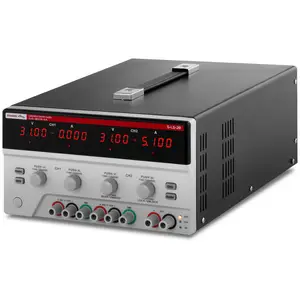

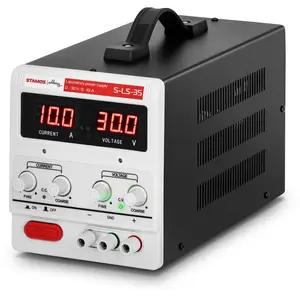
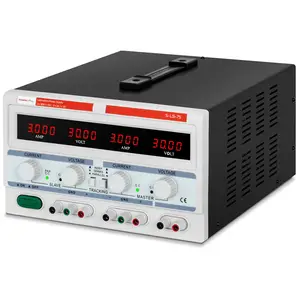
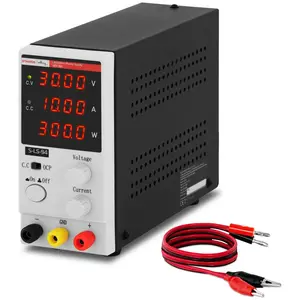
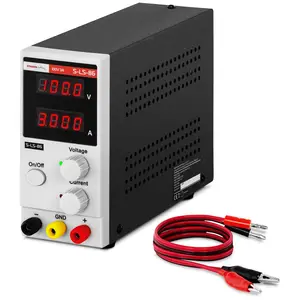
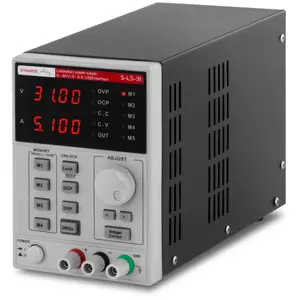
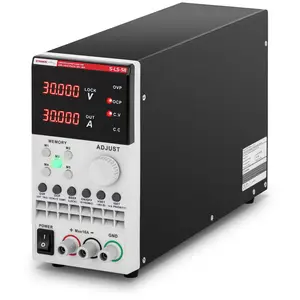
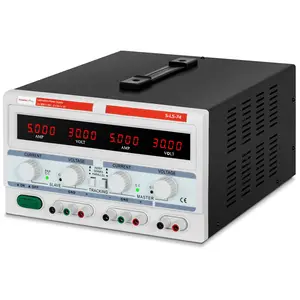
Dual Power Supply - 2x 0-30 V, 0-5 A DC, 550 W
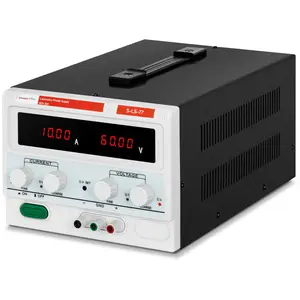
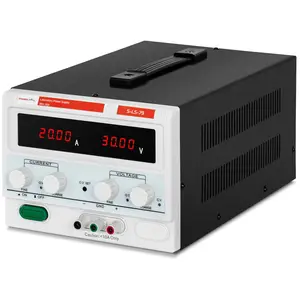
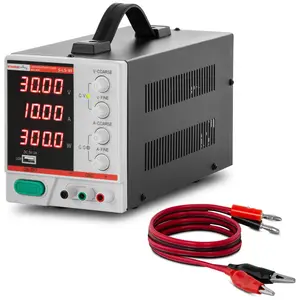
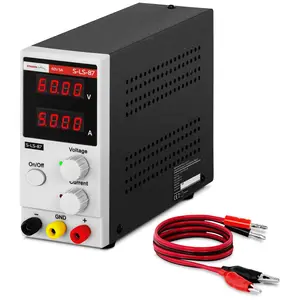
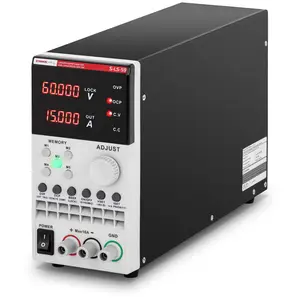
Laboratory Power Supply - 2-60 V - 0-10 A DC - 600 W
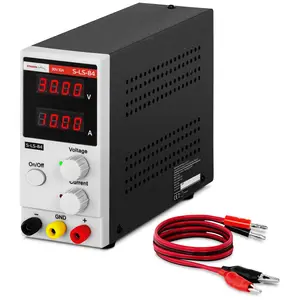
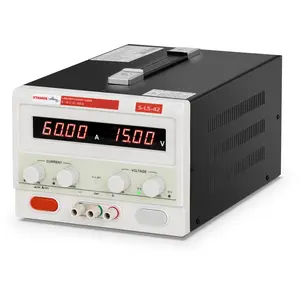
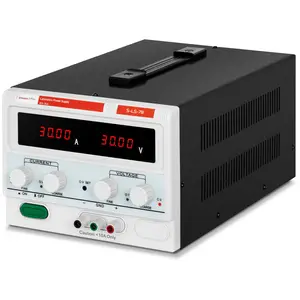
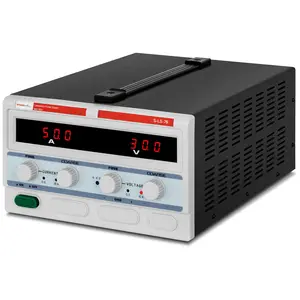
- First
- 1
- Last
Electronic testing equipment: laboratory power supply solutions for the bench
Electronic testing equipment is the backbone of reliable prototyping, troubleshooting, and quality checks, and a laboratory power supply is often the first instrument reached for. Whether you are bringing up a new PCB, validating a sensor module, or verifying an embedded controller, a stable, adjustable DC source gives you a clean starting point for repeatable results. Our selection is geared towards day-to-day bench work where confidence in voltage stability and current behaviour matters as much as convenience.
A laboratory power supply is designed to deliver controlled power with the sort of precision that makes diagnostics faster. Clear displays help you monitor output voltage, output current, and operating mode at a glance, while fine adjustment lets you dial in exactly what a circuit expects. Stable regulation supports consistent measurements, and low-noise output is ideal when you are checking analogue stages or sensitive signal paths where interference would otherwise complicate testing.
Current limiting is a standout feature for safe first power-up. Instead of risking components when something is miswired, you can set a maximum current and let the supply protect the project while you investigate. This is particularly helpful for early-stage prototypes, small motors, LED loads, and battery-powered designs being tested on the bench. Built-in safeguards such as overload and short-circuit protection add reassurance when experimenting, teaching, or handling repairs under time pressure.
From compact units suited to tight benches to more capable models intended for continuous use, our electronic testing equipment emphasises usability: intuitive controls, sturdy housings, and dependable performance in workshops and labs alike. If your work includes validating control boards for devices used outdoors, a controlled DC source is invaluable for replicating supply conditions and checking behaviour before a system is reassembled and returned to service alongside outdoor power tools equipment.
Electronic testing equipment for development: bench power supply control and protection
A bench power supply brings lab-style power control into an everyday format that suits electronics development and repair. It is a practical choice when you need quick setup, frequent changes to test parameters, and a sturdy unit that stays on the worktop ready for action. In many workflows, the bench supply becomes the “known good” reference point, letting you focus on the device under test rather than questioning your source.
For development tasks, flexibility is key. Adjustable voltage and current ranges allow you to emulate different power scenarios, such as brownouts, current spikes, or steady-state loads. Constant voltage and constant current operation enable you to switch smoothly between powering logic circuits and driving test loads without changing instruments. This type of electronic testing equipment is also ideal for controlled charging experiments and for bringing up designs where power rails must be verified one at a time.
Protection features are not merely a nice-to-have; they are an essential part of a productive bench. Accurate current limiting helps prevent damage when a prototype contains an unseen short, and dependable output stability avoids elusive faults that only appear under noisy or drifting conditions. Clear readouts support quick documentation of test settings, while responsive controls help you iterate faster during debugging. When the aim is repeatable testing, a bench power supply is an investment in both safety and efficiency.
A bench setup typically extends beyond power alone, and electronic testing equipment integrates naturally into a broader electronics workspace. If you are assembling, modifying, or reworking circuits, pairing a stable supply with soldering stations keeps development flowing from build to test to refinement with minimal downtime. The result is a cleaner process, fewer mistakes, and a more professional finish on every project you power up.
Electronic testing equipment that scales: dual power supply configurations and workshop-ready performance
As projects become more complex, a dual power supply can transform how you test. Many modern devices require multiple rails—such as a logic supply plus an analogue supply, or separate domains for motors and control electronics. With two independently adjustable channels, you can power these rails simultaneously, compare behaviours, and confirm power sequencing without juggling multiple devices.
Dual output capability supports efficient fault-finding and realistic simulation. You can isolate subcircuits, test with different current limits per rail, and create controlled conditions that mimic real-world operation. This is particularly valuable when validating microcontroller boards with peripherals, testing audio or instrumentation circuits with sensitive front ends, or confirming that power-hungry sections do not introduce instability into the rest of the design. In short, it is electronic testing equipment that grows with your workload.
Workshop-ready performance is about more than output figures; it is about confidence during long sessions and repeated test cycles. A robust power supply helps maintain consistent results across batches, repairs, and training environments. Easy-to-read indicators and practical control layouts reduce errors, while dependable protection behaviour means your focus stays on the diagnosis rather than recovery after a fault. If you need to document settings, run repeated checks, or move from one unit to the next quickly, the right supply keeps your workflow smooth.
Choosing the best electronic testing equipment is simpler when you match the supply to the way you work. Consider the voltage range you need, the maximum current your applications demand, whether single or dual outputs suit your typical projects, and how fine the adjustments must be for sensitive circuits. Also think about the physical form factor and day-to-day practicality—space on the bench, visibility of displays, and ease of access to controls. For a tidy, efficient environment, your power supply pairs naturally with storage, mounting, and general organisation solutions from workshop equipment, helping you build a reliable testing area where every tool supports faster, safer results.