


Roofing Hoists

Roofing hoists for efficient material handling at height
A reliable roofing hoist can make a significant difference when heavy or awkward materials need to be moved from ground level to a roof or upper floor. Instead of repeatedly carrying tools and building materials by hand, a powered ladder hoist provides controlled mechanical lifting, helping roofing and construction teams organise material handling more efficiently.
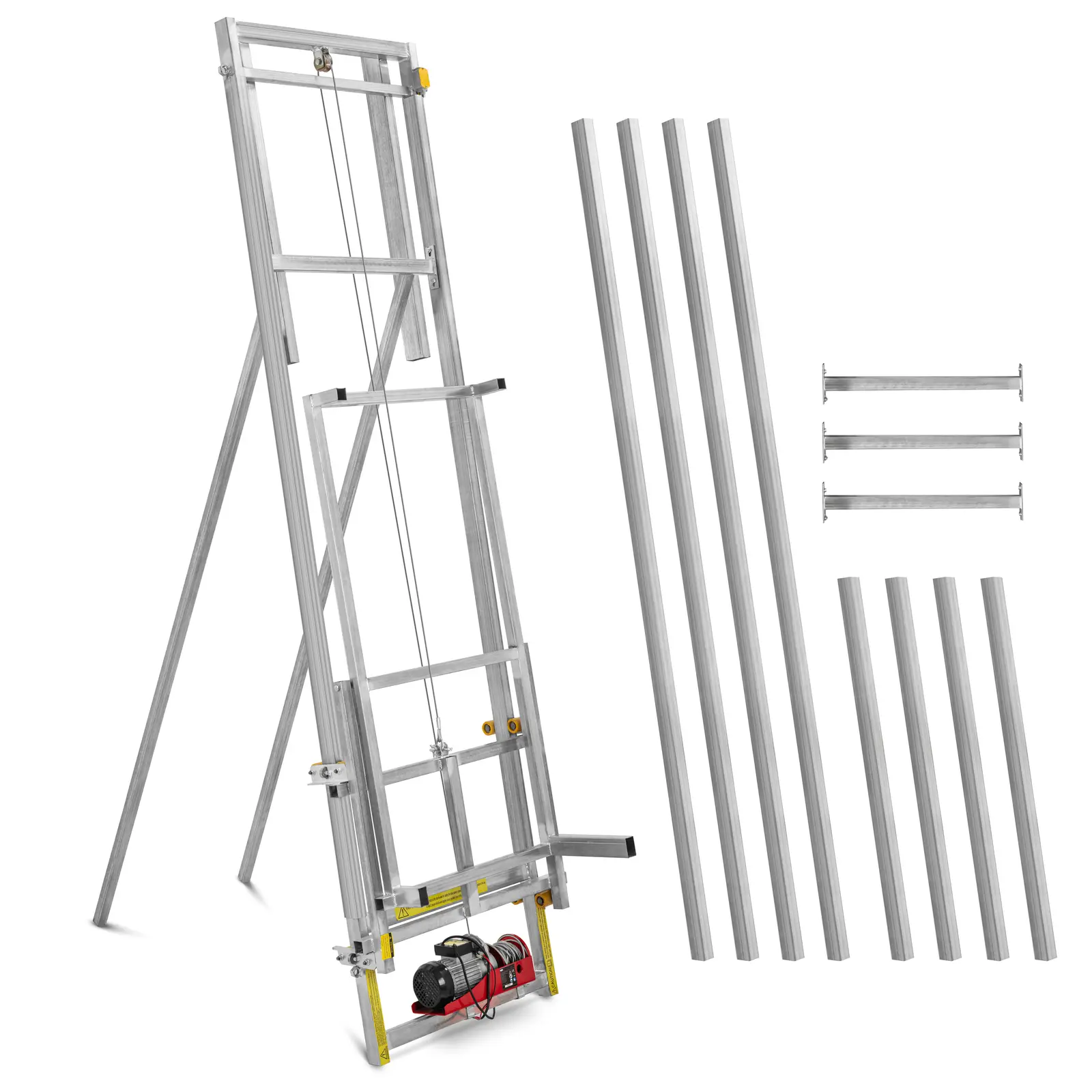
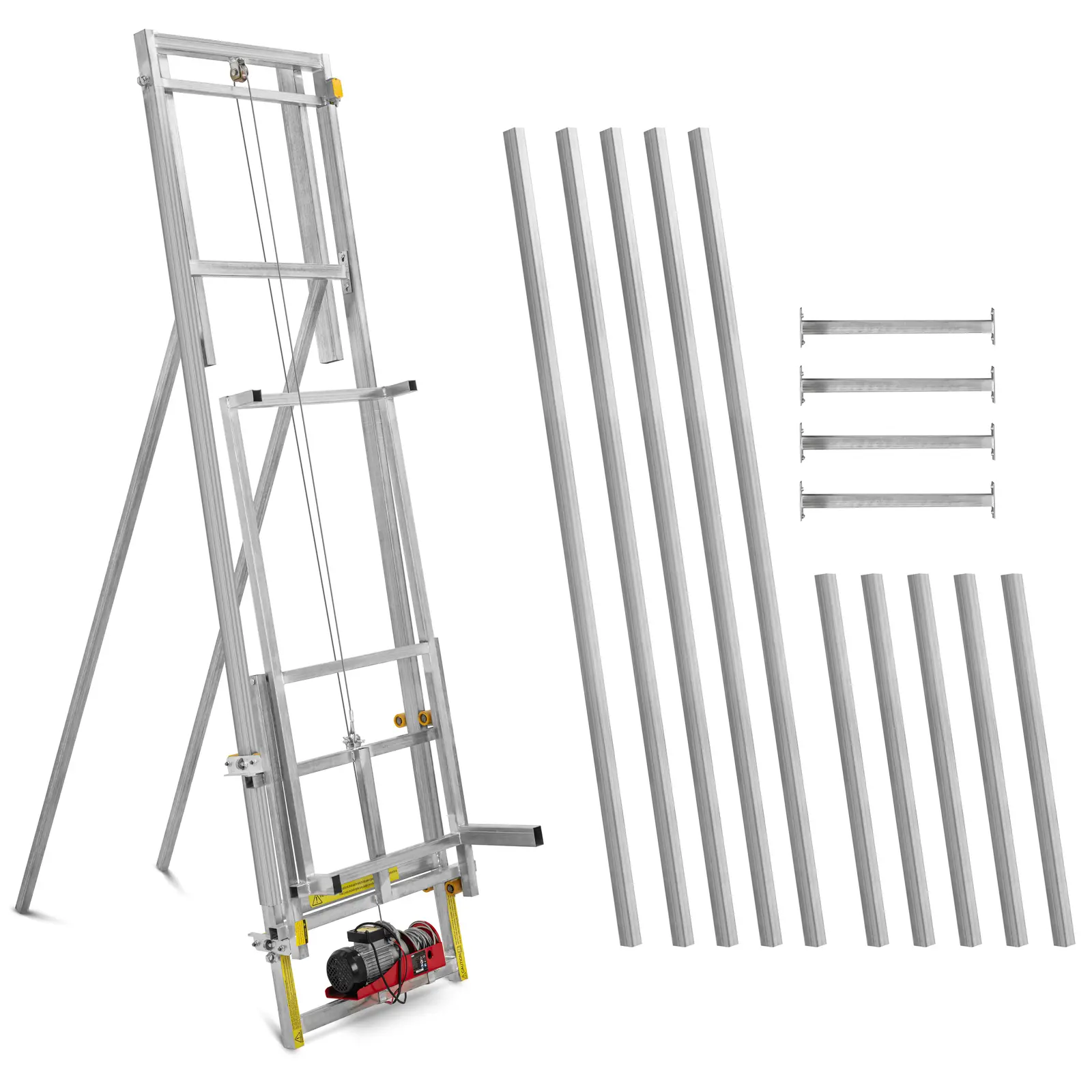
At expondo, you can choose between MSW roofing hoists with maximum lifting heights of 10 m and 15 m. Both models combine a maximum load capacity of 200 kg with a 1500 W motor, a lifting speed of 12 m/min and a spacious 150 x 70 cm platform. This makes them practical solutions for professional roofers, building contractors, installers, maintenance teams and tradespeople who regularly need to move substantial loads between different working levels.
Although equipment in this category is often searched for as a ladder hoist, roofing ladder hoist or roof hoist machine, the MSW models available from expondo use a vertical lifting design. This makes them particularly useful where materials need to travel directly upwards, including work on flat-roofed buildings and construction projects where an inclined ladder-type track would be less practical.
What can a roof hoist be used for?
A roof hoist reduces the amount of manual handling involved in moving materials to an elevated workplace. Depending on the load and the requirements of the project, a roofing material hoist can be used for building materials, roofing supplies, tools and installation equipment.
With a maximum capacity of 200 kg, the MSW roof hoists are suited to demanding site work where many individual items or larger loads need to be transported during the working day. The 150 x 70 cm platform gives you useful space for arranging materials securely before lifting.
The equipment is also suitable for installation projects involving solar panels. Moving panels, tools and associated materials mechanically can simplify site logistics, particularly where repeated journeys between ground and roof level would otherwise consume considerable time and labour.
For roofing contractors, the main benefit is straightforward: materials can be brought closer to the point where they are actually needed. That can help keep skilled workers focused on installation rather than repeatedly moving supplies around the site.
10 m or 15 m ladder hoist – which model should you choose?
The two ladder hoists in the expondo range share the same key lifting performance, so the most important difference is the maximum lifting height.
The 10 m roofing hoist is a practical option for projects where the working level is relatively low, such as residential properties, garages, extensions and similar structures. It combines its 10 m maximum lifting height with a 20 m rope.
For sites requiring greater vertical reach, the 15 m roofing hoist extends the maximum lifting height by another 5 m and is equipped with a 30 m rope. It is therefore better suited to projects where materials must reach higher working levels.
Both versions provide:
- a maximum load capacity of 200 kg;
- 1500 W motor power;
- a lifting speed of 12 m/min;
- a 150 x 70 cm loading platform;
- a 5 m wired remote control;
- emergency stop function;
- a limit switch;
- overload protection;
- a sectional design intended for convenient assembly, dismantling and transport.
Because their lifting performance and platform dimensions are otherwise very similar, there is little reason to select the longer system unless your expected working height requires it. Choosing a hoist for roofing that closely matches the building height can help avoid unnecessary equipment while still providing sufficient reach for the project.
Why lifting capacity and speed matter
Maximum load capacity should be one of the first specifications you check when comparing roof hoists. Both MSW models in this category handle loads of up to 200 kg. The total weight placed on the platform must remain within this limit, including all materials, tools or other items being lifted together.
Lifting speed also affects productivity. At 12 m/min, these roofing hoists are designed to move loads steadily between levels without the slow, repetitive handling involved in carrying individual items manually. On projects where roofing materials need to be supplied throughout the day, even small improvements to each lifting cycle can contribute to a smoother workflow.
The 1500 W drive provides the power required for the rated lifting performance. When comparing a roof hoist machine, however, motor output should not be considered in isolation. Maximum load, lifting height, platform dimensions, controls and the lifting layout are all equally important when deciding whether a machine fits the intended job.
Safety features for controlled roof lifting
Working at height demands careful planning, and mechanical ladder hoists should always be operated according to their instructions and within their stated limits. The MSW roofing hoists available at expondo include several features designed to give the operator greater control during lifting.
A wired remote with a 5 m cable allows the machine to be controlled from a more convenient position away from the moving platform. An emergency stop provides a direct way to interrupt operation when required, while the limit switch helps control platform travel. Overload protection provides an additional safeguard against operation beyond the machine's intended load capacity.
These features do not replace correct site preparation, trained operation or appropriate working-at-height procedures. Before using any roofing ladder hoist, ensure that the system has been assembled correctly, the lifting route is clear and the load is positioned securely. Always follow the operating manual and applicable site safety procedures.
Vertical roofing hoists or inclined ladder hoists?
Not every ladder hoist works in the same way. Many traditional ladder hoists use an inclined rail following the angle of a ladder or pitched roof. That format can be useful when the load needs to follow a sloping route.
The MSW models offered by expondo use a vertical configuration instead. The platform travels directly upwards along the structure, making these units particularly suitable for flat roofs and projects where a straight vertical lifting route is preferable.
This distinction is worth considering before buying. Look at where the machine can be positioned, the required loading and unloading points and the path the platform needs to follow. If the job requires vertical movement to a roof edge or upper floor, the expondo design can provide a particularly practical solution.
For other workshop, construction or material-handling requirements, you can also explore expondo's wider range of lifting equipment.
What should you consider when buying a roofing hoist?
Start with the required lifting height. Measure the planned lifting route rather than estimating from the number of storeys alone. The 10 m model will cover many lower-level roofing projects, while the 15 m version provides additional reach for taller structures.
Next, consider the loads you expect to handle. Both expondo roofing hoists have a 200 kg maximum capacity and a 150 x 70 cm platform, so check both weight and physical dimensions. A load that falls below the weight limit must still be positioned appropriately on the platform.
Site layout is equally important. Make sure there is enough room for assembly and a clear area for loading at ground level and unloading at height. Consider where the operator will stand, how the load will be secured and whether other workers or equipment could enter the lifting zone.
Finally, think about how often the equipment will be transported between jobs. The MSW systems are designed for assembly and dismantling on site, making them a useful choice for contractors who need to move their roof hoist from one project to another rather than installing a permanent material lift.
Buy roofing hoists for professional construction and installation work
The expondo range keeps the choice of roofing hoist straightforward. Both MSW models provide the same 200 kg lifting capacity, 12 m/min lifting speed, 1500 W motor and 150 x 70 cm platform, with the choice determined mainly by whether you need up to 10 m or 15 m of vertical reach.
Features such as the wired remote control, emergency stop, limit switch and overload protection add useful operational control, while the sectional construction supports transport between worksites. Technical information, operating manuals and spare-parts support are also available through expondo, making it easier to assess the equipment before purchase and support it throughout its working life.
Whether you call it a ladder hoist, roof hoist, roofing hoist or roofing material hoist, the important point is to choose equipment that matches your load, working height and site configuration. Compare the two MSW models above to find the right lifting height for your next roofing, construction or installation project.