


Salad Spinners

Get inspired with expondo blog



Salad spinners for crisp leaves and faster prep
Salad spinners are the simple, dependable way to turn freshly washed greens into plates that look and taste their best. By removing water quickly and evenly, they help leaves stay crisp, prevent dressing from sliding off, and reduce the soggy waste that can creep into busy prep. Whether you are drying mixed leaves for service, rinsed herbs for garnishes, or sliced vegetables for a vibrant slaw, a good spinner brings speed and consistency to everyday kitchen routines.
At the heart of every salad spinner is a straightforward idea: spin the inner basket to push water through the perforations, then collect the liquid in the outer bowl. This saves time compared with draining in a colander, and it is far more reliable than patting leaves dry by hand. The result is cleaner presentation and better texture, particularly for delicate ingredients such as lamb’s lettuce, baby spinach, rocket, and fresh basil.
Because salad spinners do not rely on complicated settings, they are easy to integrate into any workflow. Wash, spin, pour, and repeat. With the right capacity, you can handle individual portions without waste or spin larger batches to support continuous service. For kitchens that value efficiency, pairing salad spinners with other prep essentials such as food processors can create a smoother rhythm from washing and drying to slicing, shredding, and assembling.
Beyond salads, spinning also benefits ingredients that should be dry before cooking. Excess water can reduce browning, dilute marinades, and create splatter in hot pans. Drying leafy greens before sautéing, rinsed vegetables before roasting, or herbs before chopping can make a noticeable difference to the final dish. A salad spinner is therefore not just a salad tool, but a versatile prep companion that supports better results across the menu.
Commercial salad spinners designed for everyday kitchen use
In professional environments, equipment must be quick to operate, comfortable to handle, and robust enough for repeated cycles. Commercial salad spinners are built with this reality in mind, focusing on stable bases, secure lids, and smooth spinning mechanisms that deliver strong centrifugal force without demanding excessive effort. When service is busy, the ability to load, spin, and empty efficiently helps keep prep areas tidy and reduces bottlenecks at the sink.
Capacity is often the first consideration. Larger salad spinners are ideal for batch prep, helping you dry multiple heads of lettuce or bigger quantities of washed produce in one go. Compact models shine where space is tight or where you need to keep smaller batches fresh and ready. Choosing the right size can also help with portion control: you can spin only what you need, keeping the rest of the ingredients at their best for longer.
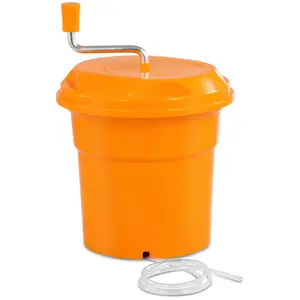
Different drive styles can support different working preferences. A hand-crank mechanism is familiar and easy to control, making it simple to adjust speed and stop quickly. Pull-cord designs can be fast for short bursts, useful when you want vigorous spinning without a large footprint. Push-button brake systems, where available, are especially helpful for quick stops between loads, keeping the pace up while maintaining safe handling.
Materials matter for hygiene and durability. Smooth, easy-clean surfaces help prevent residue build-up, while sturdy baskets keep their shape even when loaded. Clear bowls and lids can be convenient for visual checks during spinning, allowing you to monitor water removal without interrupting the process. For kitchens that rely on consistent standards, salad spinners fit naturally alongside other commercial kitchen accessories, supporting an organised, hygienic prep station from wash to service.
Choosing salad spinners to match your menu and workflow
The best salad spinners are the ones that suit how you actually work. Start with what you spin most often: delicate leaves, robust greens, herbs, or shredded vegetables. If you frequently prepare mixed salads for service, a larger basket can prevent crushing by giving ingredients room to move. If you focus on garnishes and smaller plates, a more compact spinner can be quicker to load, easier to store, and just as effective for smaller quantities.
Think about day-to-day handling. A stable base reduces movement on stainless-steel worktops, while a comfortable grip and an easy-to-lock lid can make repetitive use less tiring. Efficient drainage is another small detail that makes a big difference: being able to pour away collected water neatly keeps benches drier and reduces the need for extra cloths or cleanup between batches.
Cleaning and upkeep should be straightforward. Look for designs that separate easily into bowl, basket, and lid so you can wash all contact surfaces thoroughly. Smooth internal shapes are easier to rinse, and baskets with well-finished perforations help prevent leaf fragments from catching. A spinner that cleans quickly is more likely to be used consistently, which in turn supports better food quality and safer routines.
Finally, consider how salad spinners sit within your broader setup. They are a practical cornerstone of prep, and they complement a wide range of small kitchen equipment that keeps service moving. When your greens are properly dried, every next step becomes easier: seasoning clings, textures stay crisp, and presentation looks fresher for longer. With the right salad spinner, you gain a reliable tool that helps you deliver clean, vibrant plates—day after day, shift after shift.